
Whether you like it or not, non-fungible tokens (NFTs) have exploded in this universe in the past couple of years. With the advent of metaverse, the frenzy for NFTs, or virtual properties shows no sign of cooling off anytime soon. From art and music to burgers or anything else you can image, these digital assets are selling like exotic treasures—some for millions of dollars. For the big fashion houses, however, NFT’s phenomenal growth poses both opportunities and challenges. Famous brands like Luis Vuitton and Burberry already ventured into the NFT worlds by developing their own digital assets. In the meantime, brand owners are presented with a new and unique challenge in the era of metaverse and NFTs: how to police and protect their intellectual property (“IP”) rights in the wild and vast metaverse?
- The First NFT Trademark Infringement Lawsuit:
Several lawsuits have been filed against the creator of alleged IP
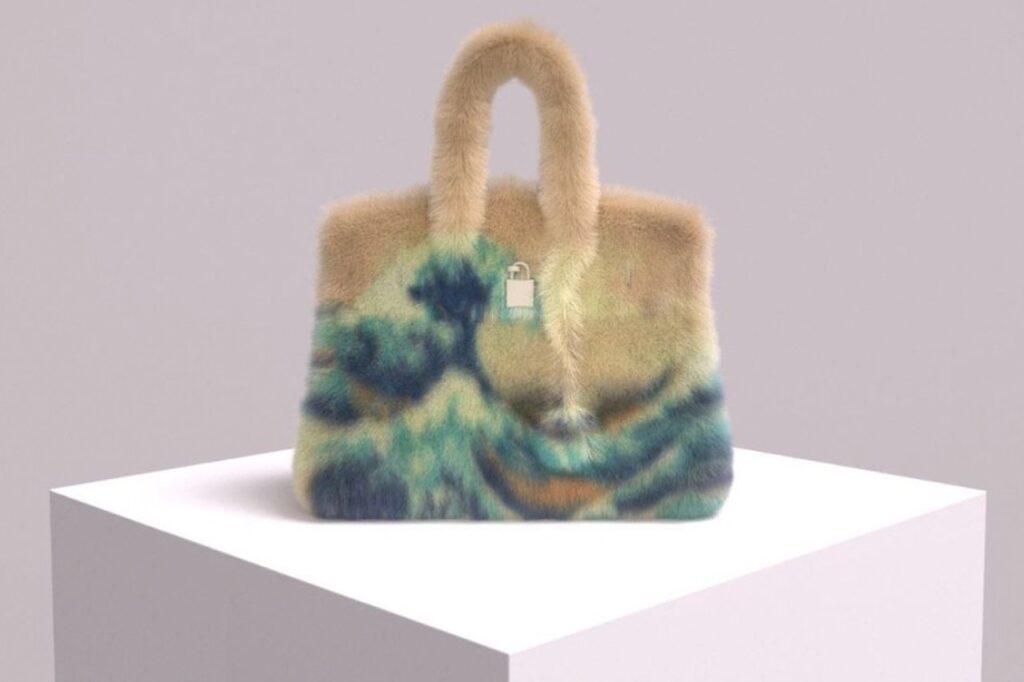
The creator of the NFT Birkin bags admits his digital work is inspired by Hermès’ famed Birkin bag. Launched by the shopping and social platform Basic Space, the NFT Birkin bag was sold for $47,000 USD. Following the inaugural Birkin bag NFT, Rothschild created MetaBirkins, which is a collection of 100 unique Birkin-inspired NFTs. At this time, Rothschild claims that MetaBirkins has sold over 1.1 million USD, which is amazing feat but not uncommon in the NFT world. As one of Hermès’ most famous fashion products, a Birkin bag looks like the one shown below.
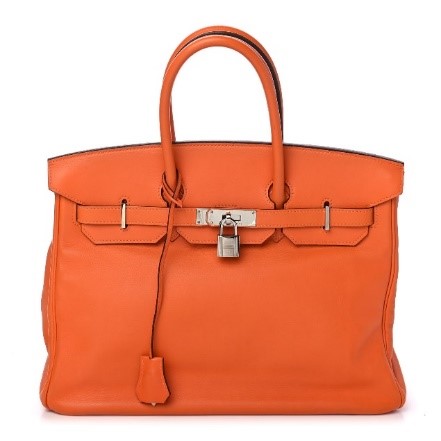
The Birkin bag is so famous, Hermès has spared no expense in protecting its most prestigious product design. It not only registered the Birkin name as trademark, but also managed to register at least two design trademarks in connection with the Birkin bag. One is U.S. Trademark Registration No. 3,936,105 (“‘105 Trademark”), which covers the contour and overall design of the bag (dotted lines are not part of the trademark). Another is U.S. Trademark Registration No. 1,806,107 (“‘107 Trademark”), which covers the middle belt with a lock. Both design trademarks are shown as follows:
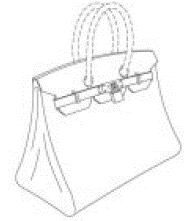
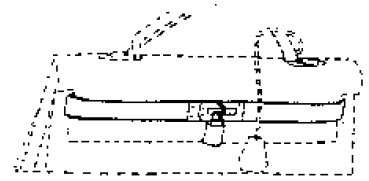
The benefit of a product design trademark is that it could theoretically protect the design of a famous product forever, without worrying about the legal expiration of a design patent or copyrighted work.
The question is: do Rothschild’s MetaBirkin bags infringe Hermès’ trademark rights? Or does Rothschild have a legitimate defense for his NFT inspirations. The simple answer is it depends. Although Rothschild publicly admitted that his works were inspired by the Birkin bag, it does not necessarily mean he does not have a good defense to his works. One, he could claim fair use of the Birkin bag trademarks because his designs are art works, not trademark use. Under the U.S. trademark law, Rothschild could claim exception as an artistic work protected under the First Amendment, which he rightfully claimed in an open letter response to Hermès. To claim protection under First Amendment, Rothschild likely have to prove that his use of the Birkin trademarks is (1) “artistically relevant” to the work and (2) not “explicitly misleading” as to the source of content of the work.
Hermès filed the lawsuit with the U.S. District Court of the Southern District of New York on January 14, 2022. As expected, Mr. Rothschild filed a motion to dismiss, claiming the MetaBirkin is an artistic work protected under the First Amendment. The judge denied the Motion on May 5, 2022. The case is now proceeding with Mr. Rothschild trying to immediately appeal the judge’s denial of his motion to dismiss.
The Hermès v. Rothschild ordeal won’t be the only incident of court battle for brand owners. With the flooding of NFTs in the Metaverse, brand owners have to face the challenge of policing their precious IP against those who seek to profit from it in the virtual world.
The MetaBirkin bag NFTs are relatively easy for Hermès to spot. How about millions of other NFTs currently on sale in OpenSea and other NFT platforms? Do brand owners need a virtual operator to help them to scout the virtual world for IP infringement? Detecting infringement in the virtual world poses unique challenges for the tech world. Human eyes are obviously unequipped to effectively police against trademark infringement. Current technologies may not be effective to police the vast space of metaverse either.
Luckily, we are in the age of artificial intelligence. A.I.-powered tools can be adjusted to meet the new challenges for brand owners in the virtual world. For example, the A.I. based search engine developed by Huski.ai can be reengineered to detect “virtual” trademark counterfeiters in the Metaverse. The Huski.ai engine proves to be capable of catching the “smart” counterfeiters on the Internet, who use twisted or cropped images to make it difficult for brand owners to detect infringement. Using the same technologies, the Huski.ai engine can be deployed in the virtual world to catch “virtual” infringers. As the NFTs are accepted into the mainstream, “virtual” enforcers will undoubtedly play a bigger role for the big IP houses.
- The Huski Solution for IP Infringement in the NFT and Metaverse:
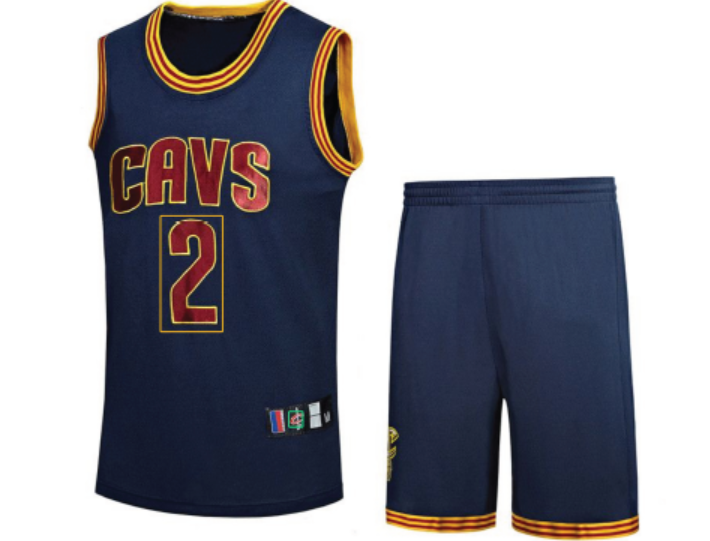
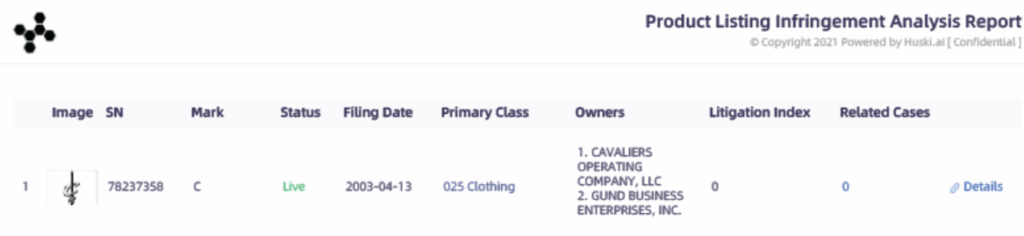
Established in 2020, Huski.ai, a Silicon Valley-based tech startup, has developed an AI-powered branding analysis and monitoring service. Its trademark search engine is particularly powerful for difficult design mark searches and could become a powerful tool for a brand owner to catch carefully disguised online infringer. Huski’s deep learning-based image recognition algorithm scans millions of product listings online to quickly and accurately identify potentially infringing listings with images containing a protected mark. In the example shown below, the Huski.ai search engine was able to search an online store and accurately locate the infringing symbol on a jersey that counterfeits the logo for the NBA Cavalier team.
How does Huski do it? It employs an AI-driven approach in the most challenging cases for trademark infringement detection, i.e., locating similar images (design trademarks). Finding similar images is one of the most critical and time-consuming tasks in trademark clearance search, trademark watch, and brand protection. The scale of images to be examined and the diversity of them are simply too prohibitive for any manual search and monitor by even the teams of the most experienced examiners. Therefore, a search engine, as easy to use as Google where you simply upload an image and get instant results of truly “similar” images, is in great demand. Although there are such offerings in the market, they are usually quite expensive and less effective. The AI-driven Huski trademark image search engine was conceived to provide a fast, intelligent, and affordable solution for the most challenging job of trademark infringement detection in images. With it, you will see some of the most impressive results the state-of-the-art image recognition has to offer.
Traditionally trademark attorneys relied on the design search code to “describe” the “content” within an image and tried to retrieve other registered trademark images with the same design search code, in hoping that they have similar “content”. Although this approach was effective occasionally, often times it is hard to learn, hard to use, and difficult to get meaningful results.
In one interesting testing scenario, your input could be one of the Michael Jordan dunking pictures. Magically, the Huski engine can tell you that the region around the yellow box looks like some trademarks. In a few seconds, the Huski AI has just recognized the “Air Jordan” trademark from that image out of 3,000,000 pictorial trademarks without any hint or human intervention.

If you think the Huski search engine got lucky in the Air Jordan example, the following are additional examples where it correctly identifies a matching design trademark in a picture.


Let’s dive deeper into Huski’s AI-driven trademark search technologies. The search engine learns how to abstract important information from a picture and use that to match against other trademarks in the database. As long as the essence of the image is successfully extracted, the Huski search engine can match it with the correct trademark in its vast trademark database.
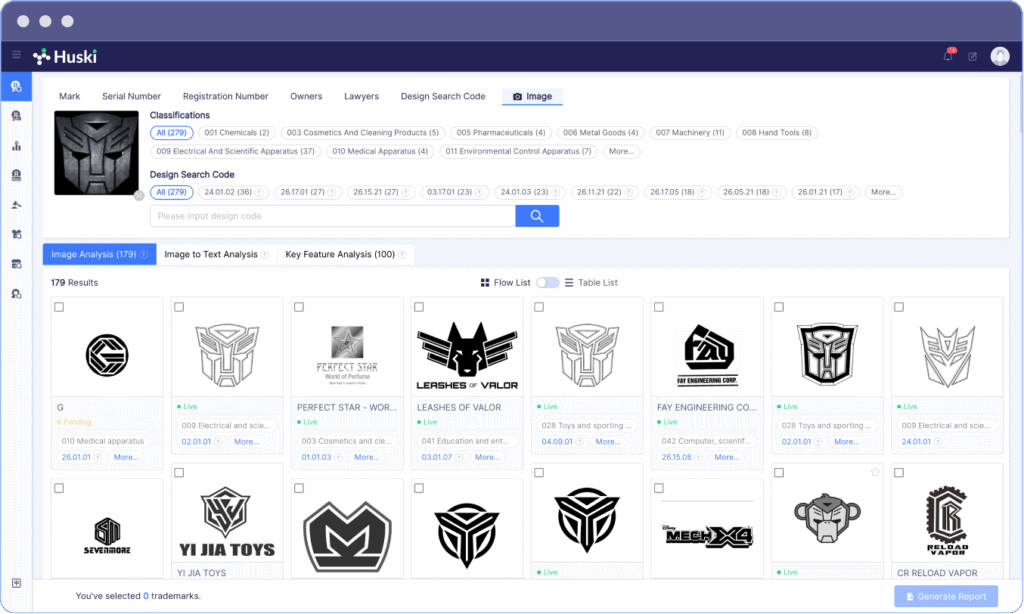
The Huski search engine can also champion a successful search even when the target image is not in an ideal condition. In the example below, we are looking at the Transformer’s Autobot logo. The input picture is very dark. Although human can clearly see the content, it is considered blurry and low contrast for machines. However, Huski’s AI search engine still did a good job in finding other Autobot or even Decepticon trademarks.
Huski’s AI search engine can be readily deployed to detect infringement in the Metaverse. This example below is a tricky scenario of searching infringing NFTs. The input is a NFT design of a Nike shoe. We found that Nike had trademarked a similar design of one of their shoes.

With a powerful tool like Huski.ai, a brand owner can rest assured that no “smart” counterfeiter can get away from infringement with tricky techniques, not even in the seemly lawless Metaverse. If an online marketplace like Amazon or Aliexpress employs an AI-powered tool like Huski.ai to scan its new online listings, can we finally root out the growing problem of online counterfeiting? For brand owners anxious of infringement in the quickly expanding Metaverse and NFTs, the emergence of the Huski.ai AI search engine is definitely a great news.